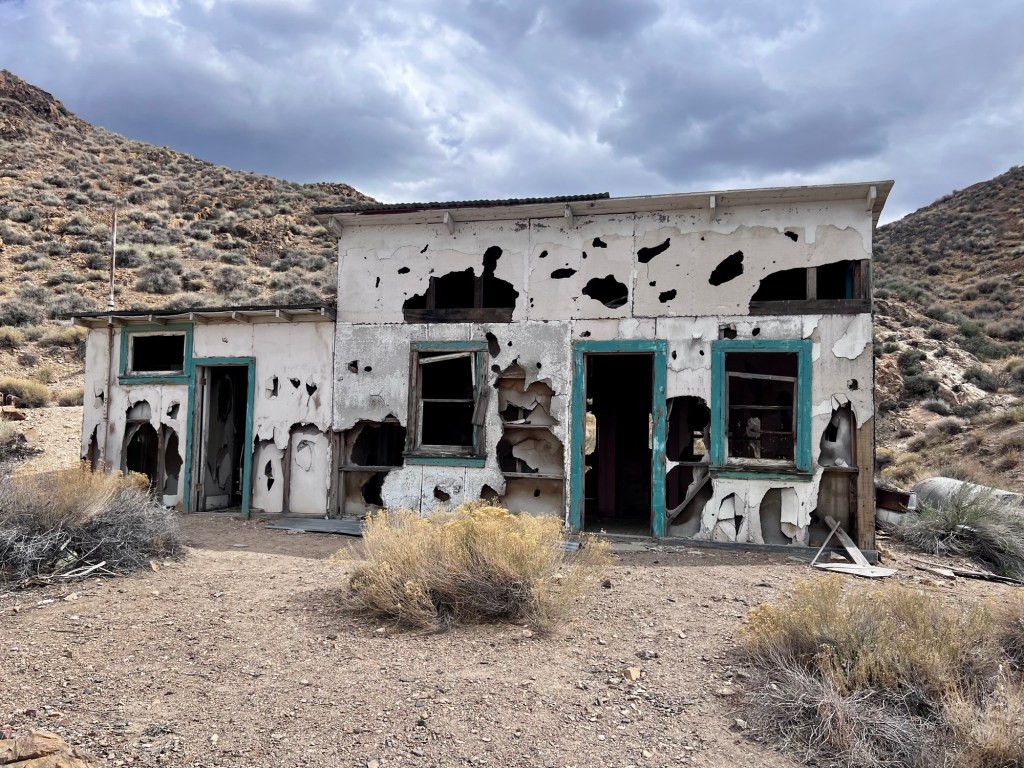
Death Valley has no shortage of abandoned places, but few unsettled me quite like Aguereberry Camp.
It’s funny, because objectively there wasn’t much there. Just a handful of weathered buildings tucked into the desert near the old Eureka Mine. No gift shop. No ranger. No signs of life at all.
Maybe that’s exactly what made it so eerie.
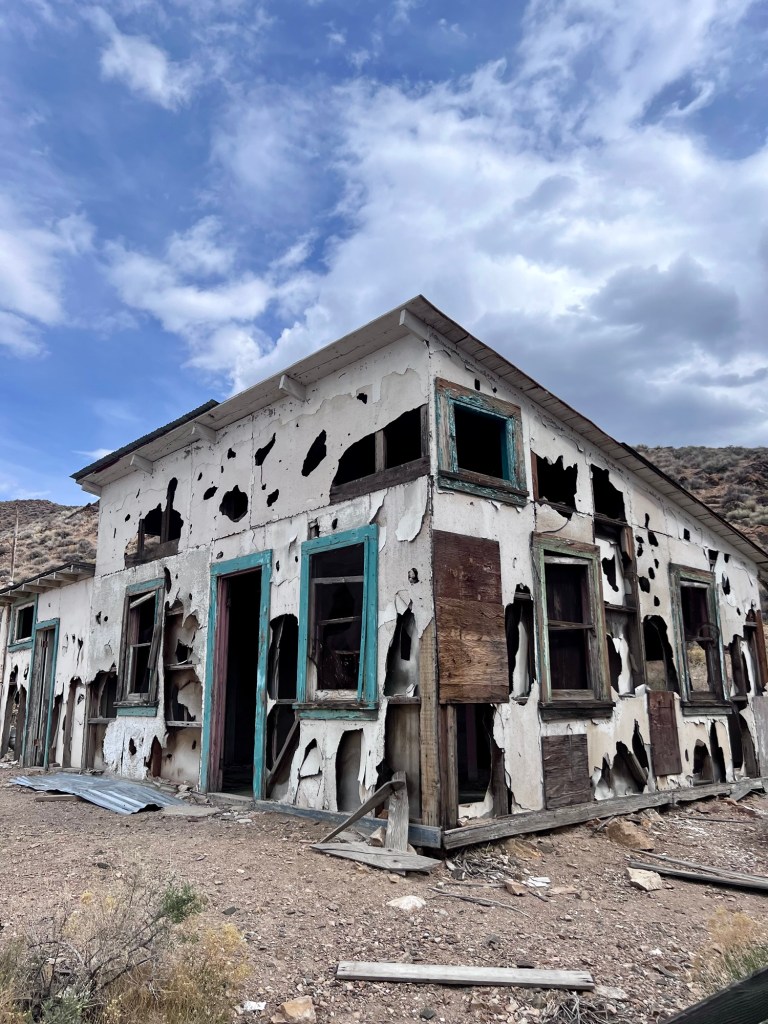
As I pulled up, I could see that I was completely alone. There wasn’t another car anywhere in sight. I wandered from building to building, peeking through broken windows and carefully stepping inside rooms that had been abandoned for decades and just slowly breaking down more and more. Every creaking floorboard and gust of wind made me wonder if I was about to star in the opening scene of a horror movie.
But never mind my imagination running wild – the camp does have a fascinating history that makes it worth visiting.
The buildings were once home to Pete Aguereberry, a French immigrant who came west searching for fortune. In 1905, he and the legendary prospector Shorty Harris discovered gold in the Harrisburg district of Death Valley. While Harris eventually moved on to chase the next big strike, Pete stayed.
For roughly the next 40 years, Aguereberry worked the nearby Eureka Mine, often by himself. He never became wealthy, but he remained convinced there was more gold waiting to be found. His determination became part of Death Valley folklore, and the camp he built became both his home and headquarters for decades of mining.
Today, much of that camp still stands.
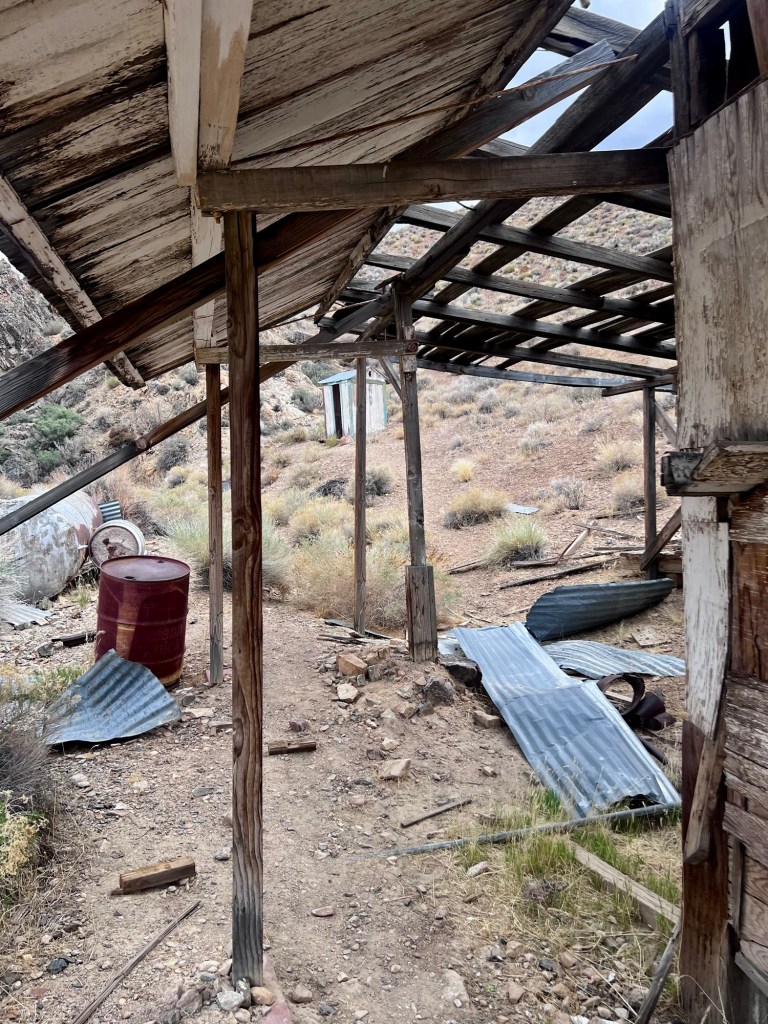
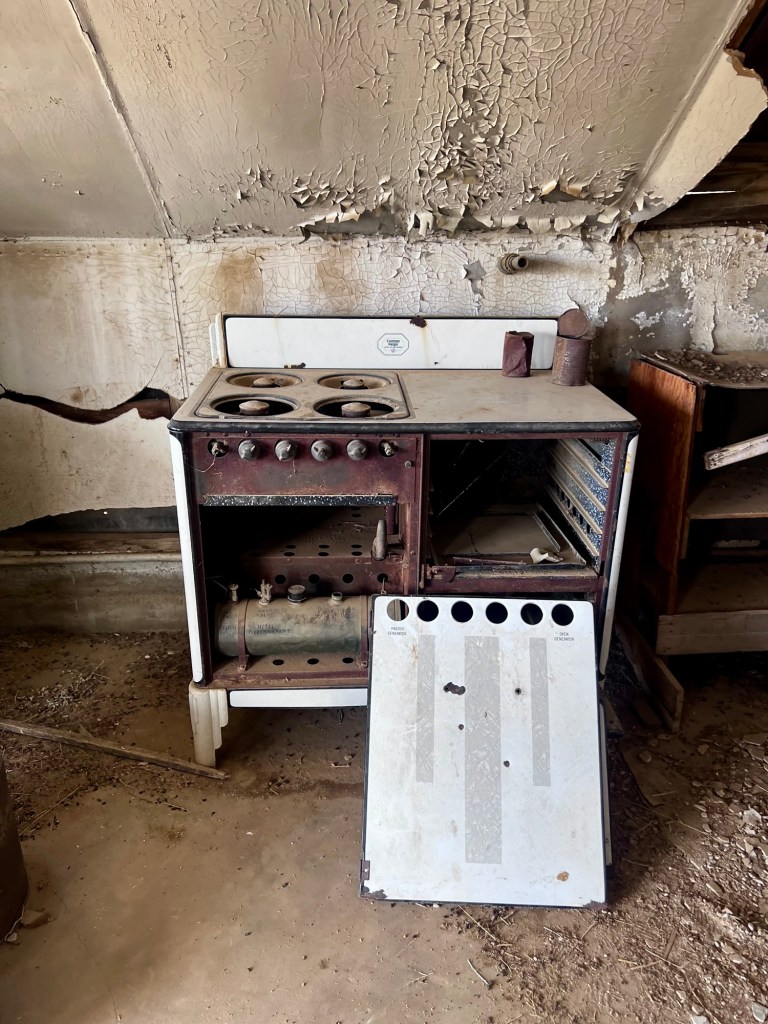
Walking through the property, you almost forget that you’re inside a National Park. Old cabins remain standing, though barely. An aging stove still sits where countless meals were probably cooked. A rusted bed frame is all that’s left of someone’s bedroom. Pieces of machinery, collapsed sheds, and weathered wood are scattered across the property. Graffiti covers the walls.
It’s remarkable that anything has survived at all. Death Valley’s extreme temperatures, flash floods, and relentless sun have been wearing these structures down for more than a century, yet they still tell the story of someone who devoted nearly half his life to chasing a dream.
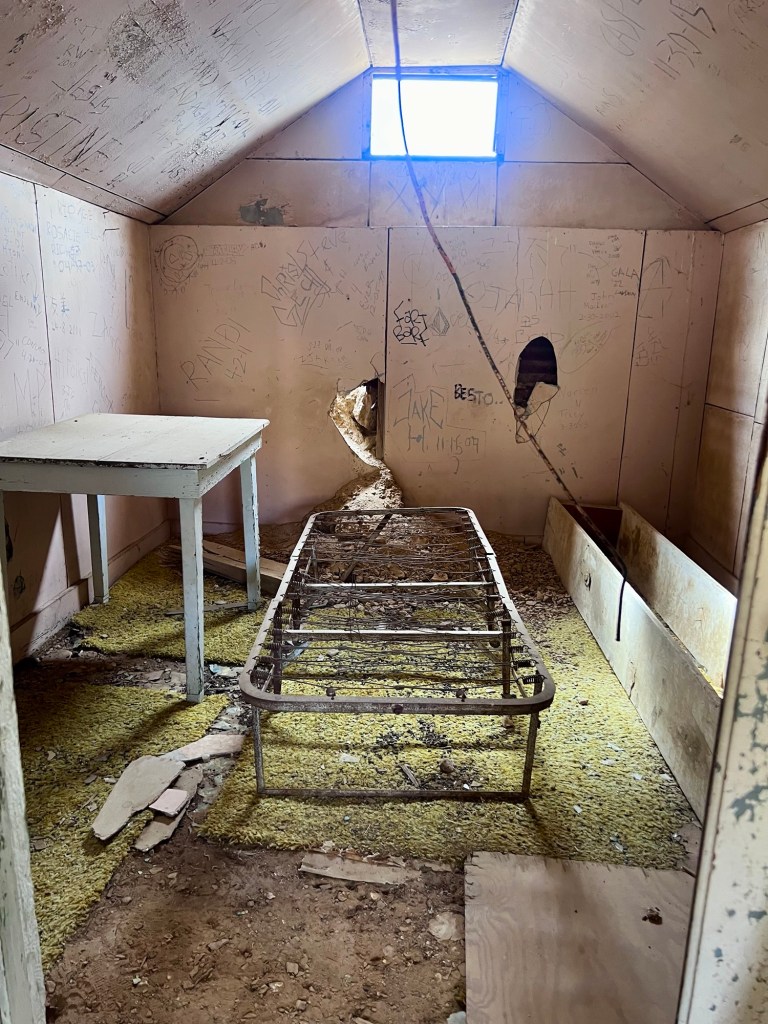
As I explored (and between bouts of anxiety thinking that someone was about to jump out and grab me), I couldn’t help wondering what daily life had looked like out here. Imagine waking up every morning surrounded by nothing but mountains and desert, spending your days digging for gold with little certainty you’d ever find enough to make it worthwhile.
The camp is one of those places that reminds me why I love exploring beyond the famous overlooks and postcard views. Death Valley isn’t just about salt flats, sand dunes, and colorful canyons (or, occasionally, gorgeous wildflower super-blooms); it’s also a landscape filled with stories of people who tried to build lives in one of the harshest environments on Earth.